 WiseWeightChoices
What really determines energy balance: calories in vs calories out explained
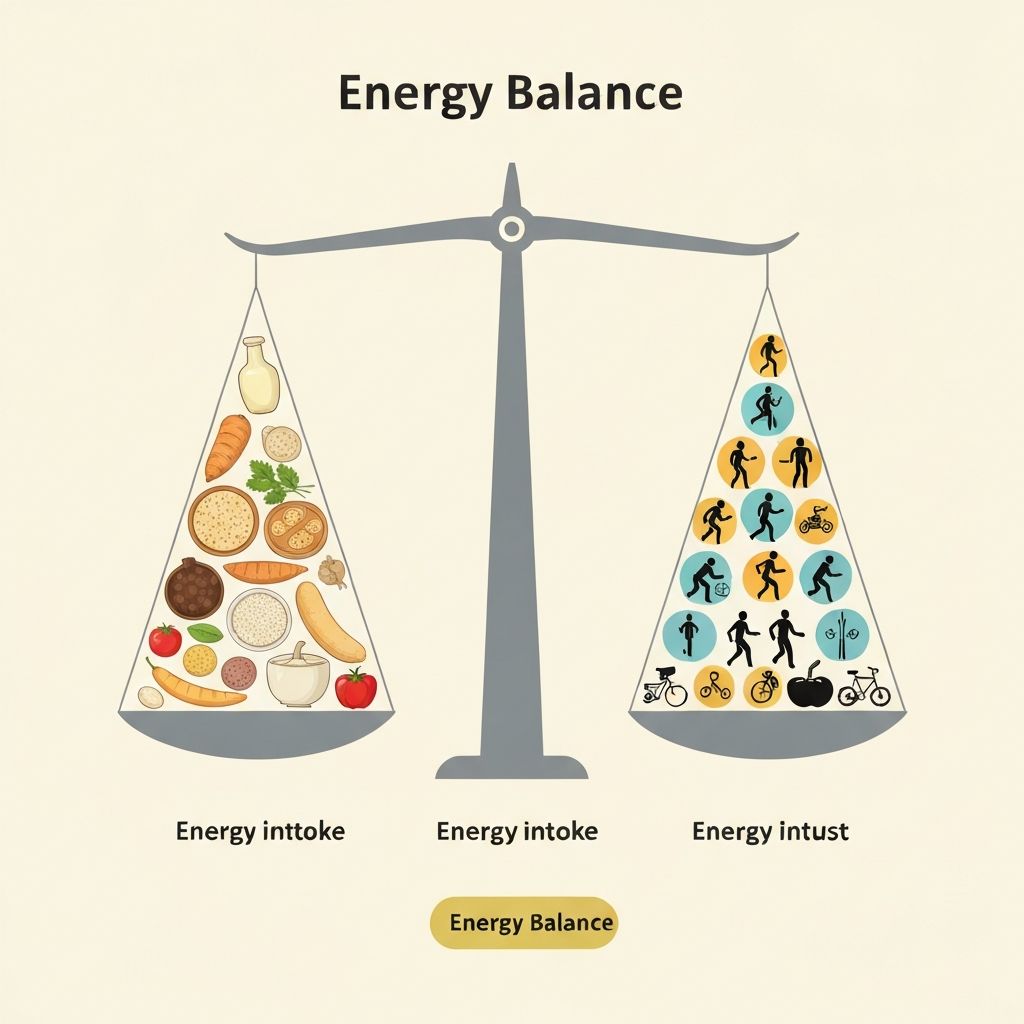
Understanding Energy Balance
Energy balance is a fundamental concept in nutrition science. In its simplest form, it refers to the relationship between the energy you consume (from food) and the energy your body expends. When these are equal, your weight remains stable. When intake exceeds expenditure, weight typically increases. When expenditure exceeds intake, weight typically decreases.
However, the actual mechanisms behind energy balance are far more complex than a simple arithmetic equation. Your body is not a static system, and numerous factors influence both how much energy you consume and how much you expend.
The Components of Energy Expenditure
Your total daily energy expenditure (TDEE) consists of several components:
Basal Metabolic Rate (BMR)
This is the amount of energy your body uses at rest to maintain basic functions: breathing, circulation, cell production, and nutrient processing. BMR varies based on factors like age, sex, body composition, genetics, and hormonal status. It typically accounts for 60-75% of total daily energy expenditure in sedentary individuals.
Thermic Effect of Food (TEF)
When you eat, your body uses energy to digest, absorb, and process nutrients. This is called the thermic effect of food, and it accounts for approximately 10% of total daily energy expenditure. Interestingly, different macronutrients require different amounts of energy to process. Protein requires the most energy, followed by carbohydrates, then fats.
Physical Activity Energy Expenditure (PAEE)
This is the energy you expend during deliberate exercise and structured physical activity. It varies greatly between individuals based on activity level, fitness, and type of exercise performed.
Non-Exercise Activity Thermogenesis (NEAT)
This often-overlooked component includes the energy expended through daily movement: occupational activities, fidgeting, maintaining posture, and general movement throughout the day. NEAT can vary significantly between individuals and can account for a substantial portion of total energy expenditure.
Factors Affecting Energy Intake
Energy intake is not simply a matter of willpower or conscious choice. Several biological and environmental factors influence how much food you consume:
Hunger and Satiety Hormones: Hormones like ghrelin (stimulates appetite) and leptin (signals fullness) help regulate hunger and food intake. These hormonal signals are influenced by sleep, stress, meal composition, and other factors.
Nutrient Composition: Foods with different macronutrient profiles have different effects on hunger and satiety. Protein and fiber tend to be more satiating than refined carbohydrates, for example.
Psychological Factors: Stress, emotional state, habit, and environmental cues all influence food choices and intake patterns.
Sleep Quality: Sleep deprivation disrupts hunger and satiety hormones, often leading to increased appetite and different food preferences.
Why Simple Math Doesn't Tell the Whole Story
While energy balance is real, the "calories in, calories out" framework oversimplifies what's actually happening in your body:
Adaptive Thermogenesis: When energy intake is significantly reduced, your body can adapt by reducing energy expenditure. This is why sustained severe calorie restriction often leads to a plateau in weight loss.
Metabolic Adaptation: Your metabolism is not fixed. Factors like diet composition, exercise patterns, stress levels, and sleep affect how efficiently your body processes energy.
Individual Variability: People respond differently to the same energy intake and expenditure. Genetics, gut microbiota, insulin sensitivity, and other factors create individual variation in how bodies respond to changes in diet and activity.
Quality vs. Quantity: The source of calories matters. 100 calories from broccoli affects your body differently than 100 calories from candy, in terms of nutrient value, satiety, and hormonal response.
The Bottom Line
Energy balance is a real and important concept in understanding body weight changes. However, it's better understood as a complex system with multiple inputs and mechanisms, rather than a simple math equation. Understanding these underlying mechanisms helps explain why there's no one-size-fits-all approach to nutrition, and why different strategies work for different people.
The science continues to evolve, and researchers are still uncovering new aspects of how the body manages energy and body weight. This complexity is why personalized guidance from healthcare professionals can be valuable for individual health decisions.